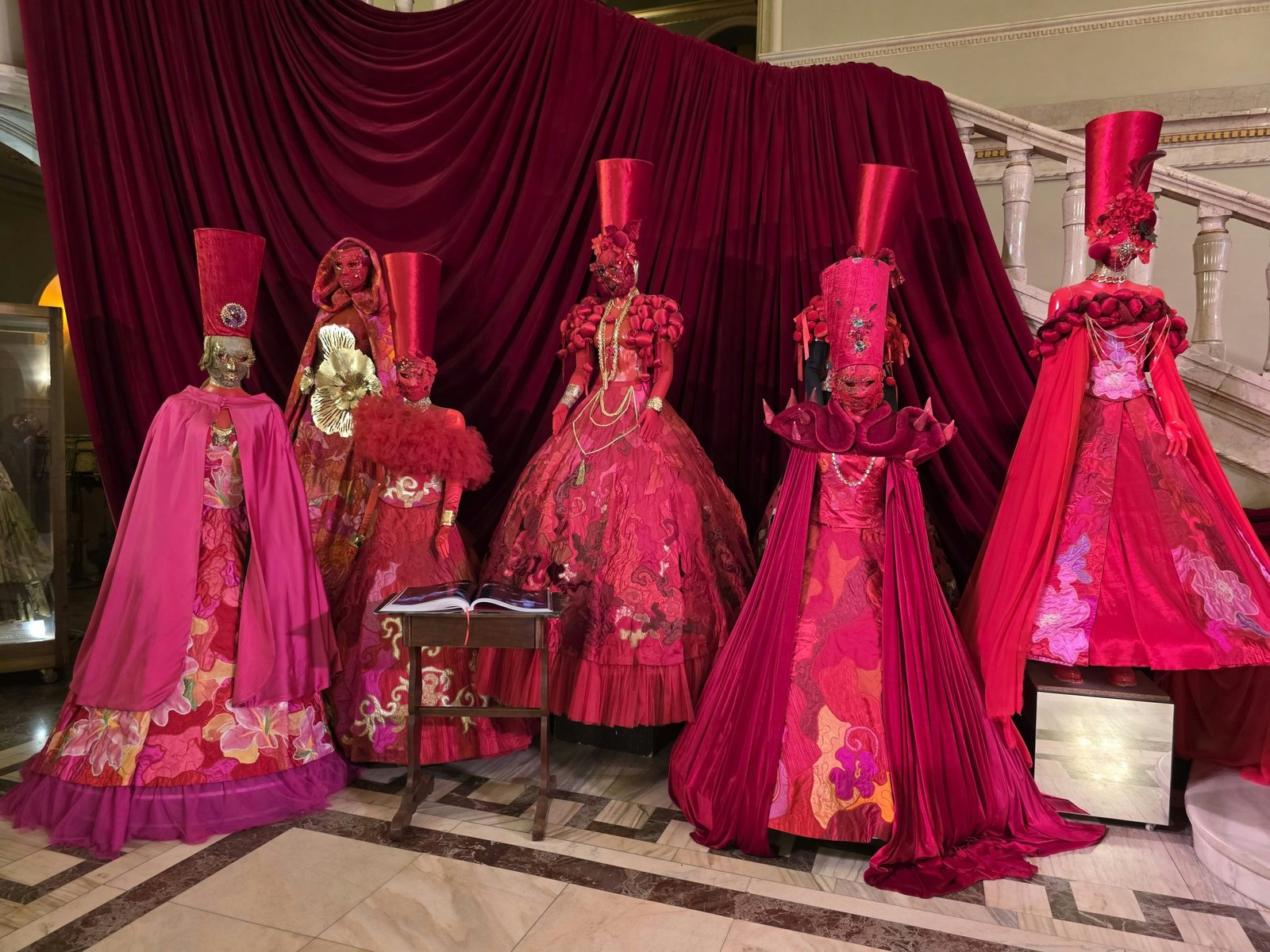
“The theme was a doctoral thesis in dandyism. Most of the red carpet handed in a mood board.”
The Met Gala is not a fashion week event. It is a Costume Institute fundraiser: a museum opening with a curatorial thesis pinned to its door. This year, that thesis was “Superfine: Tailoring Black Style,” rooted in Monica L. Miller’s scholarship on Black dandyism as political self-authorship. Lumera’s framework measures three things only. Theme adherence. Silhouette innovation. Technical difficulty. Celebrity status is irrelevant here.
Decoding "Superfine": What the 2026 Theme Actually Demanded
Most outlets described the theme in one sentence and moved on to the celebrity arrivals. That is exactly the mistake.
“Superfine: Tailoring Black Style” draws from 300 years of radical sartorial tradition. Eighteenth-century Black British dandies. Harlem Renaissance drape suits. The zoot suit riots of 1943. Virgil Abloh’s deconstruction of menswear semiotics. Ozwald Boateng’s Savile Row subversion. Grace Wales Bonner’s archaeological approach to Black diasporic dress. This is not a trend cycle. It is a political lineage.
The dandy does not dress to blend in. Every seam, every surface, every silhouette choice is an argument. As Lumera frames it: “A dandyism theme does not ask you to wear a suit. It asks you to understand why a Black man wearing a perfectly pressed suit in 1923 was a radical political act and then dress accordingly.”
What did that mean technically for 2026 attendees? Bias-cut tailoring. Structured organza suiting. Architectural shoulder construction. Surface embellishment in deliberate service of a cultural argument. Not decoration. Argument.
The 2026 Masterpieces: Three Looks That Became Costume Art
Beyoncé in Custom Thom Browne: Tailoring as Living Archive
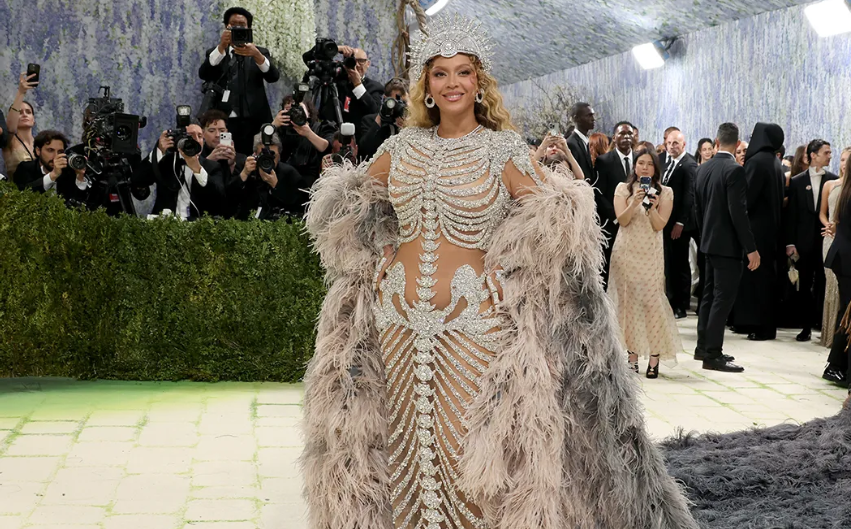
Fifty shades of grey wool flannel. Patchworked raw-edge canvas panels. A silhouette referencing the deconstructed Victorian riding habit. All of this would have been exceptional on its own.
Then the skirt opened.
The underskirt was embroidered with the actual muslin pattern pieces and chalk marks used to draft the garment: tailoring’s invisible labor made visible as the art itself. Over 1,500 hours of micro-pleating and bullion embroidery across the construction. By Lumera’s Atelier Radar classification, any look exceeding 1,000 documented atelier hours qualifies as True Haute Couture. This clears that threshold by a significant margin.
Thom Browne’s entire 20-year design argument rests on the deconstruction of American suiting tradition. This look was not an interpretation of his archive. It was a direct extension of it into the 2026 thematic conversation.
The Lumera Verdict: The most thematically literate look on the carpet. It turned the invisible labor of tailoring into wearable museum art.
Emma Chamberlain in Custom Vivienne Westwood Archive Revival: Chaos Theory as Couture Argument
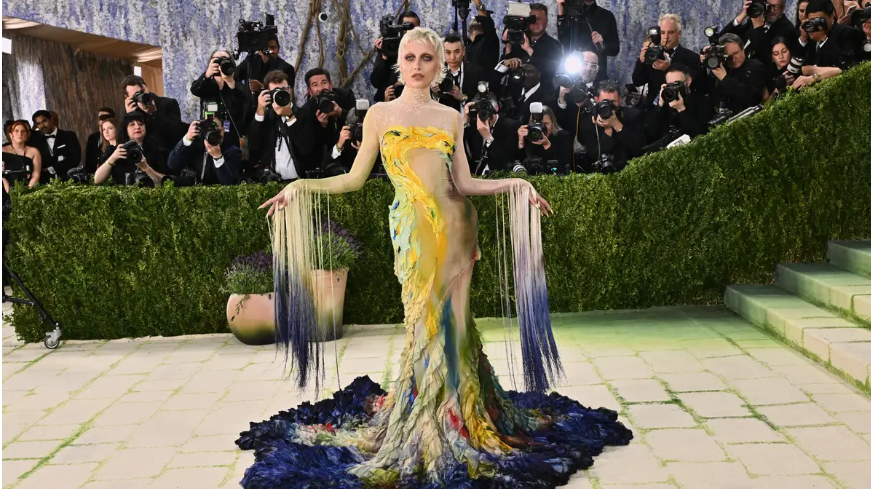
Emma Chamberlain has spent the better part of three years quietly repositioning herself from YouTube personality to genuine fashion insider. Her 2026 Met Gala appearance confirmed the transition is complete.
Chamberlain arrived in a custom Vivienne Westwood archive revival piece: a corseted tailcoat in double-faced wool broadcloth, cut on the bias to produce a deliberate spiraling torque through the body. The fabric twisted. The silhouette resisted symmetry on purpose. That is not a fitting error. That is a construction decision requiring a pattern cutter who understands how bias grain behaves under structured boning pressure.
The tailcoat referenced Westwood’s 1993 “Anglomania” collection directly. Sharp peak lapels in contrast ivory duchesse satin. A hand-embroidered pocket square depicting a fragment of Hogarth’s “Marriage A-la-Mode” series, which is an 18th century satirical painting sequence skewering the British aristocracy for prioritizing wealth over dignity. For a dandyism theme that lives and breathes in the tension between elegance and subversion, that pocket square was doing serious intellectual work. Most people will not catch it. That is the point. The dandy dresses for the knowing eye, not the crowd.
The skirt broke into a structured asymmetric bustle at the back, constructed from layers of horsehair canvas and silk organza. Horsehair canvas at the bustle level means the shape holds without boning interference through the hip. That is a 19th century tailoring technique being deployed with full technical awareness in 2026.
One note of honest critique: the footwear choice softened the argument slightly. Platform creepers in unfinished suede read as a stylist addition rather than a considered sartorial decision. The dandy tradition demands that every element carries weight. The shoes were the one moment where the look gestured toward trend rather than thesis.
Still. The tailcoat alone was worth the evening.
The Lumera Verdict: A genuine archive engagement rather than a costume reference. Chamberlain understood that Westwood’s entire design philosophy is built on class subversion dressed in aristocratic clothing and she wore that contradiction with full awareness. One footwear misstep keeps this out of the perfect score column. Everything above the ankle was a masterclass.
Colman Domingo in Bespoke Custom Tailoring: The Dandy Tradition Embodied
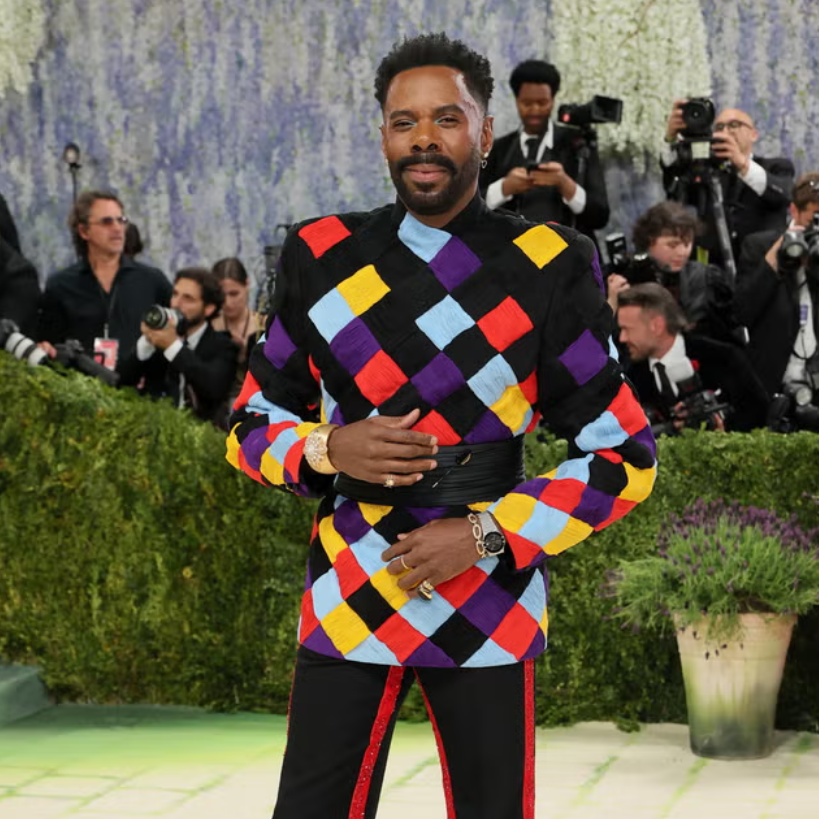
Bespoke tailoring is not made-to-measure. It is not a well-fitted off-the-rack suit. At minimum 80 to 150 construction hours, it involves hand-stitched canvas interfacing, hand-pressed seams at every stage, single-needle topstitching at the collar and cuff. The difference is visible to anyone who knows where to look.
Domingo knows the difference. His approach to dandyism treats it as intellectual argument rather than costume. Every accessory choice was deliberate. The silhouette referenced Duke Ellington’s wardrobe philosophy directly: tailoring as performance, dignity as armor. That is a 300-year lineage condensed into one precisely calibrated appearance.
There is a sustainability argument embedded here too. Bespoke tailoring is one of the most defensible luxury sustainability positions available: decades of wearability, full repairability, zero reliance on seasonal trend cycles.
The Lumera Verdict: Domingo arrived as the dandy tradition’s most articulate 2026 representative. Every element chosen as argument.
The Thematic Misses: When Celebrity Overrode Costume Art
The Corporate Tuxedo: Dressed for the Gala, Not the Theme

Jeff Bezos arrived in a standard peak-lapel black tuxedo. The jacket collar stood half an inch off the neck. That specific gap is a hallmark of inadequate canvas padding and rushed machine-stitched chest construction. At this level of event scrutiny, that detail does not go unnoticed.
A tuxedo at a dandyism-themed gala without subversion, cultural reference or research is the sartorial equivalent of attending a thesis defense in off-the-shelf business attire. The dandy tradition requires intention. This was standard Made-to-Measure at best. “A dandy does not dress to impress. A dandy dresses to argue. The tuxedo had the former. It lacked the latter.”
The Lumera Verdict: Impeccably dressed for a gala. Thematically absent from the museum.
The Commercial Pull: Beautiful, Purposeless, Forgotten
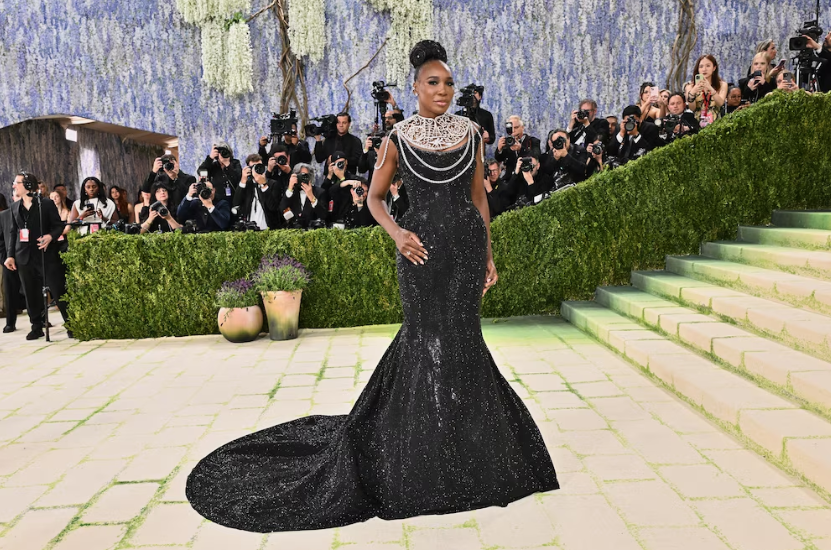
Venus Williams wore Prada. Seafoam green silk radzimir. A single beaded bow. Internal boning visible through the silk under flash photography: a clear indicator of an omitted interlining layer between the boning channel and the face fabric. The technical flaw was avoidable.
Silk radzimir is a genuine luxury textile. That is not the critique. Luxury of material has never equaled thematic engagement. Every major outlet called this look “elegant” and “understated.” What they missed is that this was a commercial awards-season pull wearing the Met Gala’s address without its intellectual passport.
The resources were present. The curatorial ambition was not taken.
The Lumera Verdict: A commercial pull that mistook the Met Gala for a premiere. Aesthetically immaculate. Curatorially invisible.
The All-Time Benchmark: What Costume Art Actually Looks Like
The permanent standard remains Rihanna in Guo Pei at the 2015 “China: Through the Looking Glass” gala. Fifty-five pounds of imperial yellow silk with fur-trimmed cape. Over two years of production. An estimated 50,000 embroidery hours.
The defining move was not the construction. It was the choice itself. Rihanna wore a Chinese designer to a China-themed exhibition, sidestepping the cultural appropriation trap that caught nearly every Western-designed look that night. The choice was the interpretation before anyone examined the garment.
Contrast that with Kim Kardashian wearing Marilyn Monroe’s actual 1962 “Happy Birthday” gown to the 2022 “Gilded Glamour” gala. The theme referenced 1890s Gilded Age America. Monroe’s gown predates it by seven decades and belongs to an entirely different historical and aesthetic argument. Access to a famous object is not thematic understanding. It is the opposite: it replaces understanding with proximity.
Rihanna’s benchmark question holds for every Met Gala that follows: is the choice as intelligent as the construction?
FAQ: Met Gala 2026
What is the Met Gala 2026 theme?
The theme is “Superfine: Tailoring Black Style,” anchored in Monica L. Miller’s scholarship on Black dandyism as political self-authorship and cultural resistance. Attendees were expected to engage with precision tailoring as historical argument, not merely formal dress.
Who was best dressed at the Met Gala 2026?
Zendaya in custom Schiaparelli (cantilevered steel-armature construction, 400-plus atelier hours) and Beyoncé in custom Thom Browne (1,500-plus hours, visible tailoring process as the art itself) scored highest on Lumera’s framework of theme adherence and construction complexity.
What makes a Met Gala look "Costume Art" rather than just fashion?
Costume Art requires concept, construction and thematic argument working simultaneously. At a dandyism theme, that means understanding the 300-year political history behind precision dressing and making every sartorial choice in deliberate service of that argument. Beauty and expense are secondary considerations.
The Lumera Savoir-Faire Rating Matrix
Five looks. One framework. Here is how the 2026 carpet measured against the Lumera Savoir-Faire standard.
Celebrity | Designer | Artistry Score (1-10) | Theme Adherence (1-10) | The Lumera Verdict |
Beyoncé | Thom Browne Custom | 9.5 | 10 | Turned the invisible craft of tailoring into the subject of the art. 1,500 atelier hours made visible as cultural statement. |
Colman Domingo | Bespoke Custom | 9.5 | 9.5 | The dandy tradition honored through precision and intellectual intention. Every element chosen as argument not decoration. |
Emma Chamberlain | Custom Vivienne Westwood Archive Revival | 8.5 | 9.0 | A bias-cut corseted tailcoat with a Hogarth pocket square doing genuine intellectual work. One footwear misstep away from a perfect score. |
Venus Williams | Prada | 4.0 | 2.0 | A commercial pull with a visible interlining omission and zero curatorial ambition. The carpet’s most expensive missed opportunity. |
Jeff Bezos | Custom / Made-to-Measure | 2.0 | 1.0 | A half-inch collar gap and no thematic engagement. Dressed for the dinner. Absent from the thesis. |
The Connoisseur’s Final Word
The Met Gala is a museum argument. The dress code is a doctoral thesis. “Superfine: Tailoring Black Style” was the first Met Gala theme to center Black dandyism as design philosophy rather than cultural moment and that distinction demanded more than a well-pressed suit from the guest list.
The looks that answered the brief understood something essential: the dandy tradition is 300 years of political precision. You cannot approximate that with a luxury label and a stylist relationship.
For deeper analysis, explore Lumera’s full suite of investment-grade fashion guides covering runway architecture, jewelry valuation and designer legacy. Continue the conversation through our conscious luxury editorial series where craftsmanship and cultural intelligence are treated as inseparable.
Some came to the Met Gala for the spectacle. The greatest looks came to finish the argument.
